Source: smartboost
In today’s digital landscape, businesses are constantly deciding where to invest their marketing efforts. Should you focus on long-term growth through organic methods or drive immediate results with paid campaigns? Understanding the difference between organic marketing and paid advertising is essential for building a sustainable and profitable strategy.
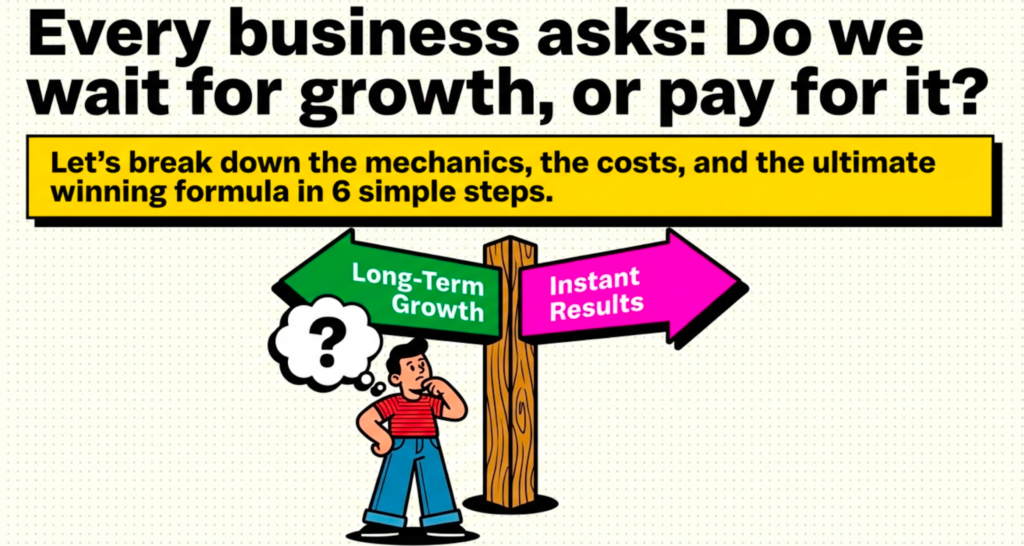
This blog will break down both approaches, explain how they work, and help you decide which is right for your business.
What is Organic Marketing?
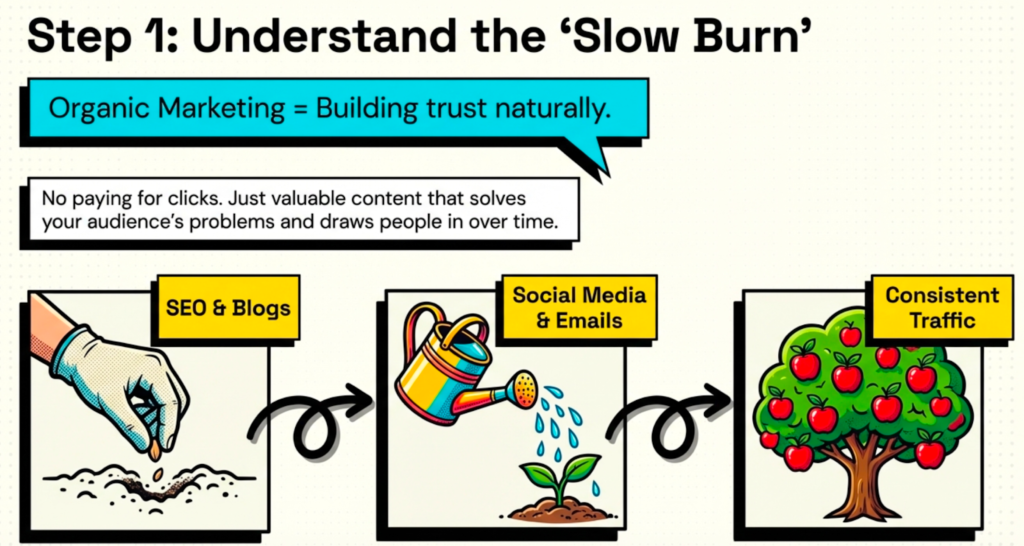
Organic marketing refers to all marketing efforts that generate traffic naturally over time without paying directly for placement. It focuses on building trust, visibility, and long-term engagement with your audience.
Common examples include:
- Blog writing
- Social media posts
- Email newsletters
- Video content
- Search Engine Optimization (SEO)
One of the core pillars of organic marketing is search engine optimization, which involves optimizing your website and content so that it ranks higher on search engines like Google. When done correctly, SEO allows your business to attract consistent, high-quality traffic without paying for every click.
Another key component is having a strong content marketing strategy. This means creating valuable, relevant content that solves your audience’s problems and builds authority in your niche.
Benefits of Organic Marketing
- Builds long-term brand credibility
- Generates sustainable traffic over time
- Lower cost in the long run
- Improves customer trust and loyalty
However, organic marketing takes time. Results are not immediate, and consistency is required to see significant growth.
What is Paid Advertising?
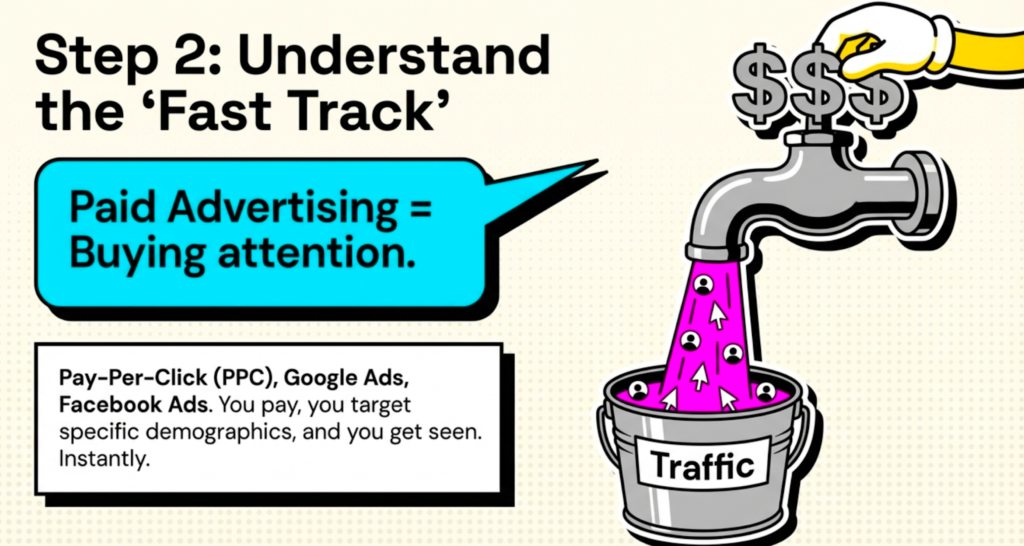
Paid advertising involves paying to promote your content, products, or services to a targeted audience. This includes platforms like Google Ads, Facebook Ads, Instagram Ads, and more.
One of the most common forms is Pay-Per-Click (PPC) advertising. With Pay-Per-Click, you only pay when someone clicks on your ad. This makes it a highly measurable and performance-driven approach.
Paid advertising allows businesses to:
- Target specific demographics
- Control budget and timing
- Generate instant traffic
- Test campaigns quickly
Benefits of Paid Advertising
- Immediate visibility and results
- Highly targeted audience reach
- Scalable based on budget
- Easy to track performance metrics
The downside? Once you stop paying, the traffic stops. Unlike organic marketing, paid ads do not provide long-term value unless continuously funded.
Key Differences Between Organic and Paid Marketing
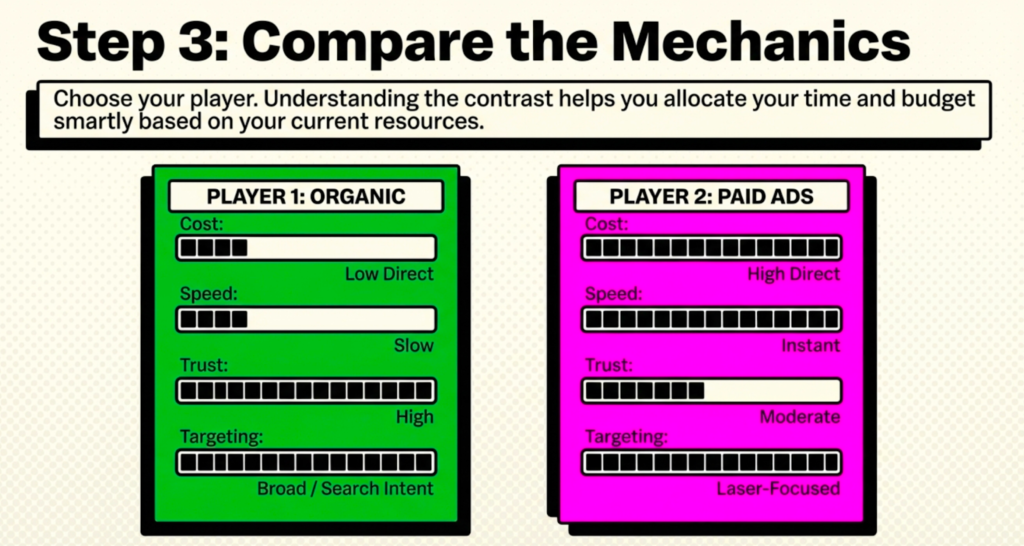
Understanding the contrast between organic marketing and paid advertising helps you make smarter marketing decisions.
| Feature | Organic Marketing | Paid Advertising |
| Cost | Lower direct costs, higher time investment | Higher direct cost (budget-dependent) |
| Time to Results | Slow and steady (months to years) | Instantaneous (hours to days) |
| Sustainability | High; content continues to provide value | Low; traffic stops when the budget runs out |
| Credibility | High; perceived as more authentic | Moderate; clearly labeled as “sponsored” |
| Targeting | Broad; depends on search intent | Granular; based on specific demographics |
1. The Cost Factor
While organic marketing is often described as “free,” it’s important to remember that time is money. Producing high-quality content and managing a content marketing strategy requires skilled professionals, whether they are in-house or outsourced. However, pay-per-click campaigns require a literal daily budget. If you stop paying, your visibility disappears instantly.
2. Longevity and Compounding Returns
Organic content has a compounding effect. A blog post written today might only get ten views this week, but as its search engine optimization improves, it could get thousands of views per month a year from now. Paid ads, however, are a “tap.” You turn the tap on, and the traffic flows; you turn it off, and it stops.
3. Trust and Authority
Modern consumers are savvy. Many people instinctively skip the “sponsored” results at the top of a Google search and head straight for the organic listings. Ranking organically signals to the user that your content is genuinely relevant and authoritative, which can lead to higher conversion rates in the long run.
When Should You Use Organic Marketing?
You should prioritize organic marketing when:
- You want to build a long-term brand
- You have time to invest in growth
- You want to reduce long-term marketing costs
- You aim to establish authority through content marketing strategy.
For example, writing SEO blogs optimized with search engine optimization can continuously bring in new visitors without ongoing ad spending.
When Should You Use Paid Advertising?
Paid advertising is ideal when:
- You need fast results
- You are launching a new product or service
- You want to test different audiences or offers
- You are running promotions or limited-time campaigns
Using pay-per-click ads, businesses can quickly validate what works before investing in long-term organic strategies.
The Best Strategy: Combining Both
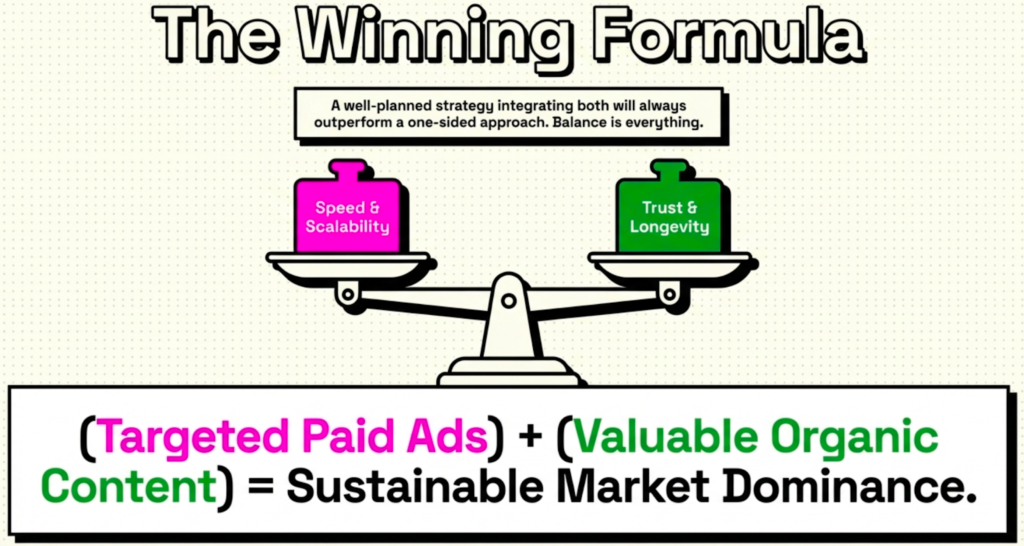
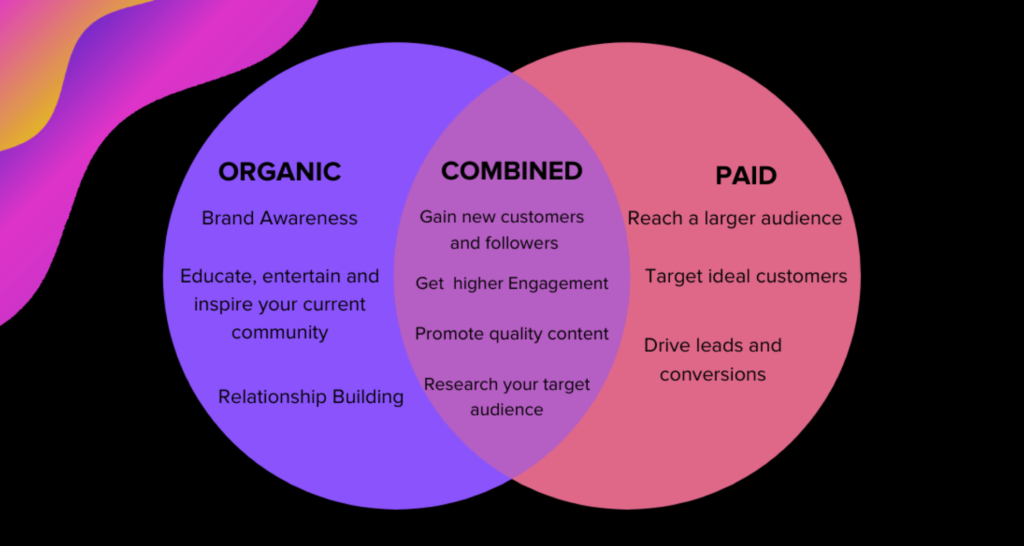
Instead of choosing one over the other, the most effective approach is to combine both organic marketing and paid advertising.
Here’s how they can work together:
- Use Paid Advertising to drive immediate traffic
- Use Organic Marketing to build long-term trust
- Use pay-per-click to test keywords, then apply them to search engine optimization.
- Support ads with a strong Content Marketing Strategy to improve conversions
For example, you can run ads to a blog post, then use that content to nurture and convert visitors organically over time.
Common Mistakes to Avoid
Many businesses struggle because they:
- Rely only on ads without building organic presence
- Expect instant results from SEO
- Ignore the importance of a clear content marketing strategy.
- Don’t track performance for Pay-Per-Click campaigns
Avoiding these mistakes can significantly improve your marketing ROI.
Conclusion
Both organic marketing and paid advertising play important roles in digital marketing. Organic helps you build a strong foundation, while paid ads give you speed and scalability.
If you’re serious about growing your business, the key is not choosing one—but learning how to balance both effectively. A well-planned strategy that includes search engine optimization, pay-per-click, and a strong content marketing strategy will always outperform a one-sided approach.
In today’s competitive market, businesses that integrate both strategies are the ones that win in the long run. If you’re looking to implement a smarter marketing approach, Spaceops Marketing can help you design a strategy that combines the power of organic growth and paid performance to drive real results.