
In today’s fast-paced digital world, small teams often struggle with one major problem: not enough time.
From content creation to ad management, social media posting to data analysis, marketing can easily take up 15–20 hours a week (or more). But what if you could cut that time almost in half using AI elements?
This blog is the story of how a small AI team transformed their workflow using AI and saved over 10 hours of marketing work every week.
🚨 The Problem: Too Much Work, Too Little Time
A small business team in digital marketing Kuala Lumpur faced a common issue:
- Limited manpower
- Tight deadlines
- Inconsistent posting
- Slow campaign execution
Their weekly marketing tasks included:
- Writing social media content
- Designing creatives
- Managing Facebook Ads
- Responding to customer inquiries
- Analyzing campaign performance
👉 Total time spent: 15–20 hours per week
This slowed down growth and made scaling nearly impossible.
The Solution: Building an AI-Powered Workflow
Instead of hiring more staff, they explored AI management services to optimize their workflow.
Their goal was simple:
👉 Use AI to reduce repetitive tasks and focus on strategy.
They didn’t replace humans, they enhanced productivity.
⚙️ Step-by-Step: How They Saved 10 Hours
1. Content Creation with AI
AI elements include ChatGPT, Gemini, and DeepSeek. The team can used different AI element tools to generate:
- Blog drafts
- Social media captions
- Ad copy
What used to take 3–4 hours now takes 30–45 minutes.
👉 AI helped them:
- Generate ideas faster
- Maintain consistency
- Reduce writer’s block
2. Automating Social Media Posting
They use AI tools to schedule and automatically publish content, such as Hootsuite, Buffer, and Later. They used these tools powered by AI to:
- Plan weekly content
- Auto-publish posts
- Optimize posting time
👉 Time saved: 2–3 hours per week
3. Smarter Ad Management
Previously, they manually adjusted campaigns daily.
After adopting an AI agency-style approach such as Google Ads and Manus, they:
- Used AI for audience targeting
- Automated budget allocation
- Tested creatives faster
👉 Result:
- Less manual monitoring
- Better performance insights
- Faster scaling
Time saved: 2–3 hours weekly
4. Customer Response Automation
They implemented AI chat tools, such as ManyChat, Intercom, and Zendesk AI, to handle customers’ issues.
- FAQs
- Basic inquiries
- Lead qualification
👉 Instead of replying to every message manually, AI handled the first layer of communication.
Time saved: 1–2 hours per week
5. Data Analysis & Reporting
Use AI tools to automatically generate data reports, such as Google Analytics, Tableau, and Microsoft Power BI.
Before AI:
- Manual reporting took hours
- Data was hard to interpret
After AI:
- Reports were auto-generated
- Insights were easier to understand
👉 Time saved: 1–2 hours weekly
📊 Total Time Saved
After implementing AI into their workflow:
- Content creation: 3 hours saved
- Social media: 2–3 hours saved
- Ads management: 2–3 hours saved
- Customer response: 1–2 hours saved
- Reporting: 1–2 hours saved
👉 Total: 10+ hours saved every week
🔍 Why This Works
The success of this AI team wasn’t about using one tool—it was about using AI strategically.
They focused on:
- Repetitive tasks
- Time-consuming processes
- Areas with low human creativity required
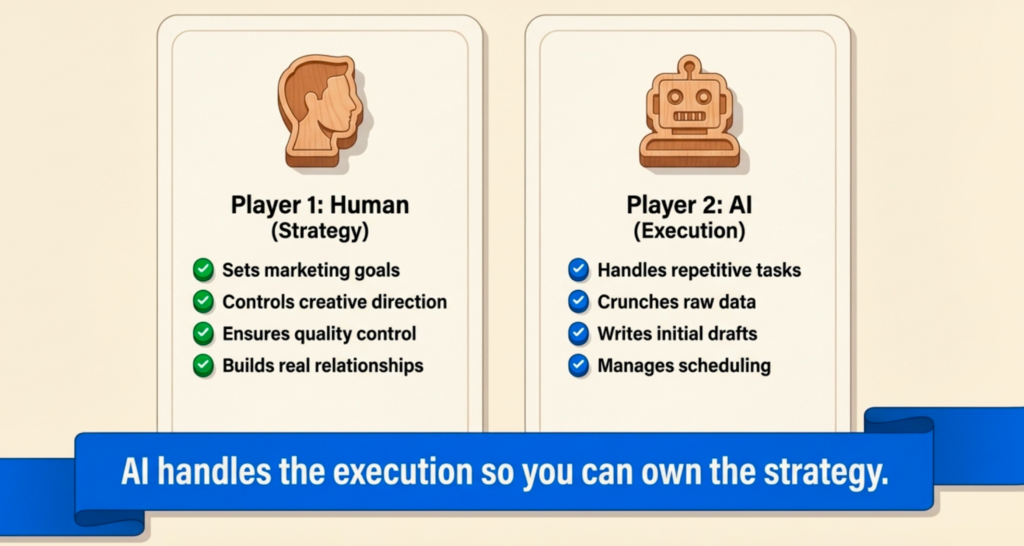
👉 AI handled the “execution,” while humans focused on “strategy.”
❌ Common Mistakes to Avoid
Many businesses fail to get results with AI because they:
- Try to automate everything
- Use AI without a clear workflow
- Ignore quality control
- Don’t align AI with marketing goals
👉 AI is a tool—not a replacement for strategy.
🚀 How You Can Apply This
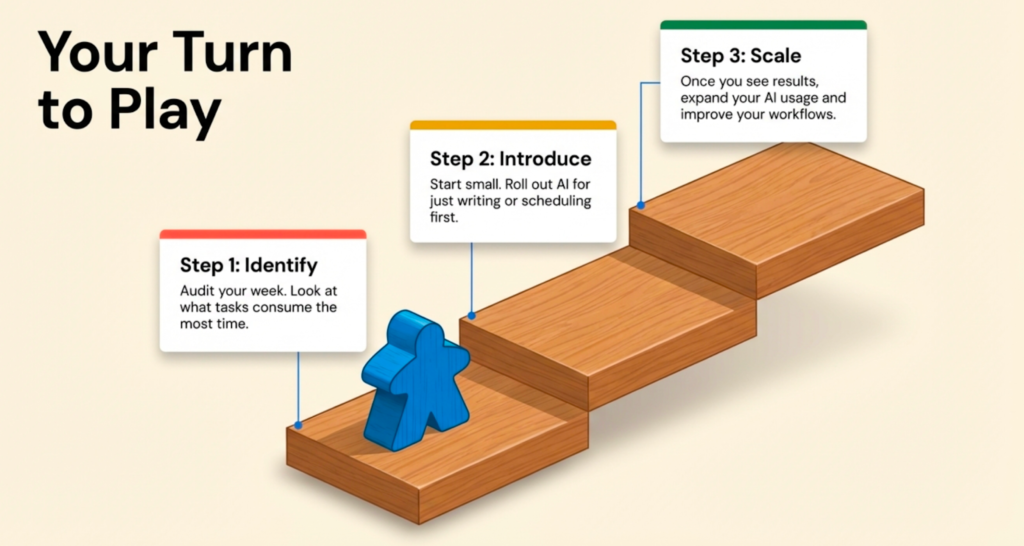
If you want to save time like this team, start small:
Step 1: Identify Time-Heavy Tasks
Look at what takes the most time weekly.
Step 2: Introduce AI Gradually
Start with:
- Content writing
- Scheduling
- Customer responses
Step 3: Optimize & Scale
Once you see results:
- Expand AI usage
- Improve workflows
- Track performance
The Real Benefit: More Than Just Time
Saving 10 hours per week is powerful—but the real impact is:
- Faster execution
- More consistent marketing
- Better scalability
- Reduced burnout
👉 This allows small teams to compete with bigger companies.
Conclusion
This small team proved that you don’t need a large workforce to succeed, you need a smarter system.
By integrating AI into their daily operations, they transformed from a time-struggling team into an efficient, scalable marketing machine.
Whether you’re running a business in digital marketing in Kuala Lumpur or anywhere else, adopting AI is no longer optional, it’s a competitive advantage.If you’re unsure where to start or want a proven system without trial and error, Spaceops Marketing offers free consultations to help businesses build efficient workflows, scale faster, and achieve better results using AI.